Darryl Cowherd - Legacy Acquisition Fund - The Gordon Parks Foundation

Growing up in Chicago's Woodlawn neighborhood, Darryl Cowherd (b. 1940) discovered photography at Roosevelt University, where he studied under Robert Earl Wilson (later known as Adeoshun Ifalade). Guided by Wilson, Cowherd began documenting life on Chicago’s South Side and throughout his career spent several years in Europe—Paris, Barcelona, and later, Stockholm—where he further developed his documentary approach and technical skills.

After returning from Europe, Cowherd returned to Chicago in the mid-1960s and became part of a vibrant community of South Side artists, writers, and activists. He joined the Organization of Black American Culture (OBAC) and contributed images to the Wall of Respect (1967), a landmark collaborative mural that helped define the visual language of the Black Arts Movement. During this time, he also worked as a reporter and photographer for the Nation of Islam’s newspaper Muhammad Speaks, photographing figures including Gordon Parks during a visit to the South Side Community Art Center.

In 1968, Cowherd joined the Swedish photography cooperative Bild, where he spent two years producing work for international publications and organizations, including the Swedish Red Cross. He later worked in broadcast journalism as a writer and editor in Washington, D.C., where he remains based.

Cowherd’s photographs have been featured in major exhibitions such as Soul of a Nation: Art in the Age of Black Power (Tate Modern, London, 2017), Never a Lovely So Real: Photography and Film in Chicago, 1950–1980 (Art Institute of Chicago, 2018), and Photography and the Black Arts Movement, 1955–1985 (National Gallery of Art, Washington, D.C., 2025). Throughout his career, Cowherd has remained committed to portraying individuals and everyday life with care and respect, a perspective shaped by his experiences in Chicago and abroad.

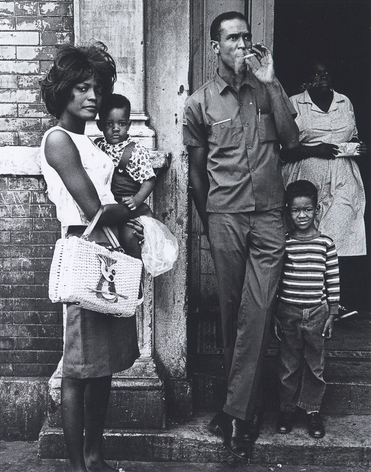
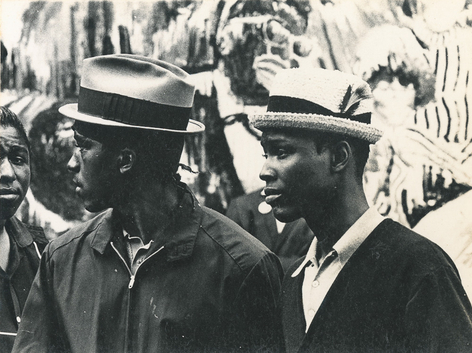
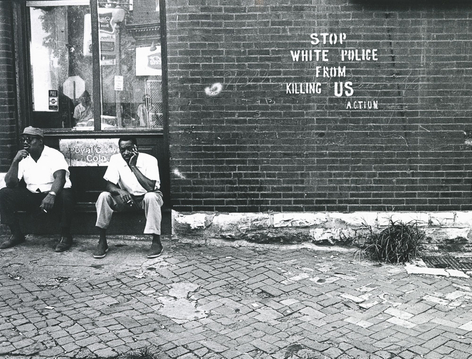
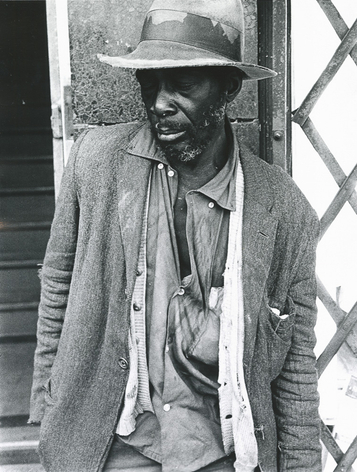
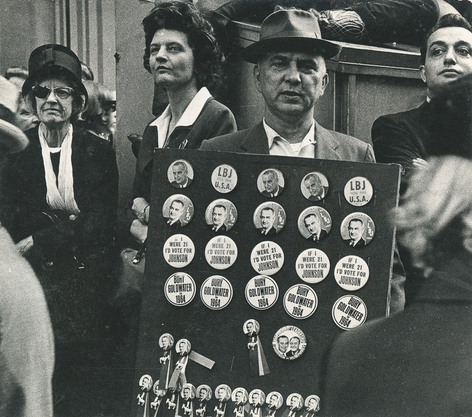
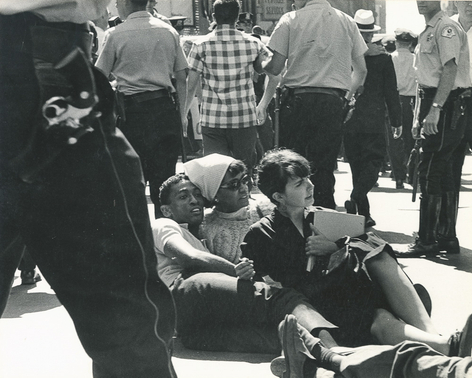
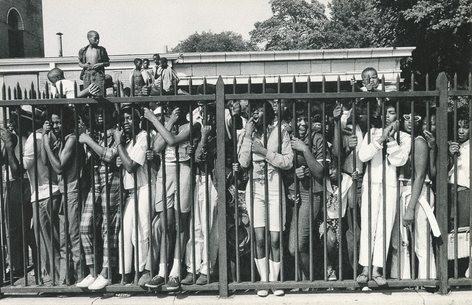
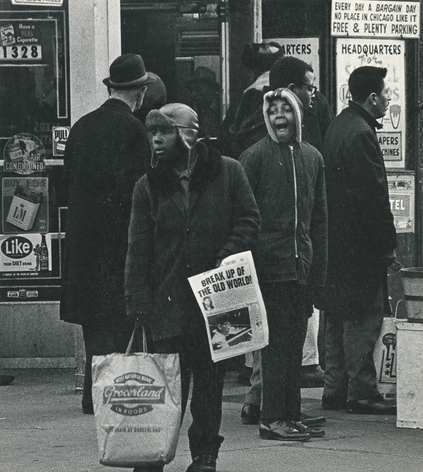
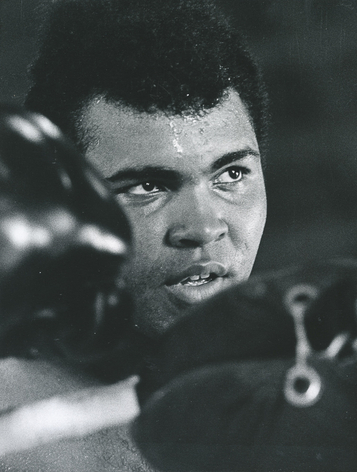
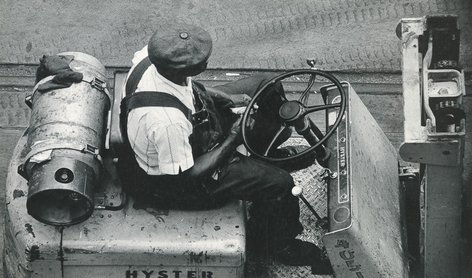
Darryl Cowherd, Indiana Avenue, Chicago, 1960–61

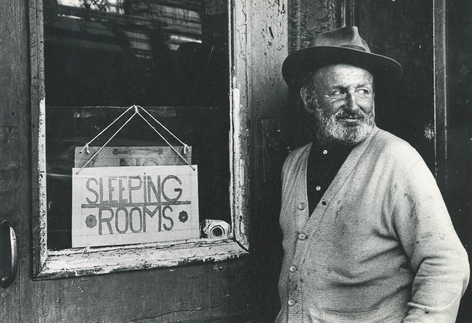
Darryl Cowherd, Indiana Avenue, Chicago, 1960–61

The following text by Darryl Cowherd is drawn from a conversation between Cowherd and Michal Raz-Russo (director of programs at The Gordon Parks Foundation) that took place on September 19, 2025 in Washington, D.C. The transcript has been edited for length and clarity.

My name is Darryl Cowherd, I was born April 12, 1940. I grew up in the Woodlawn section on the south side of Chicago. I went to Chicago Public Schools until sixth grade, then parochial grammar school, followed by parochial high school, and subsequently the University of Illinois, and then Roosevelt University, where I first developed my interest in photography. I had initially been in pre-med at the University of Illinois, but I wasn’t really matriculating.

My interest in photography came through my friendship with Robert Earl Wilson (who went by the nickname “Trees” and was later Adeoshun Ifalade), who became my mentor. To this day, I'm not entirely sure how we met—we traveled socially. Bob had just moved to Chicago; he was an ex-Marine and had lived in the Far East. He knew some of the guys I grew up with who were students at Howard. He ridiculed me about wanting to be a photographer, but he also helped me set up a home darkroom. Bob was on another level. He introduced me to Hugh Edwards, who was then the photography curator at the Art Institute of Chicago. Hugh Edwards was open to us visiting at any time. We’d talk, he would make a point, and then we’d go and find some photographs. Eventually, Bob went back to Japan, where he was previously stationed as a Marine.

I dropped out of school because wanderlust was in me. If it weren’t photography, I would have found another reason to travel. I wanted to be a war photographer. It was as much about the travel as it was the excitement of being a photographer on a foreign stage. I was looking at photographers like Robert Capa, Robert Frank, Henri Cartier-Bresson. I looked at W. Eugene Smith’s photographs, and I’d almost cry; it was so strong. I wanted to be a war photographer. I was nuts.

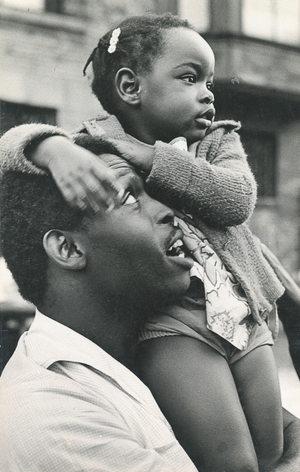
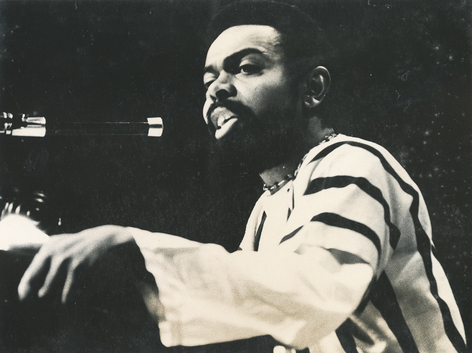
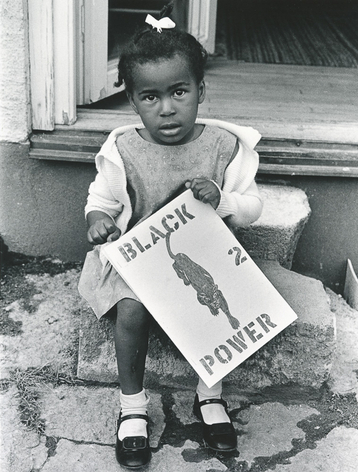
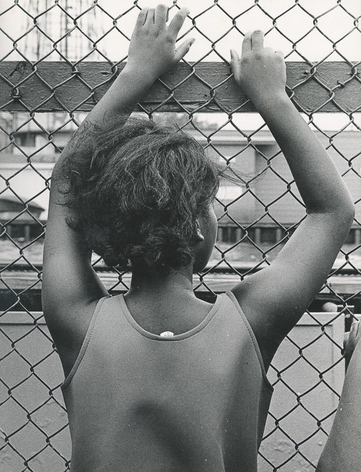
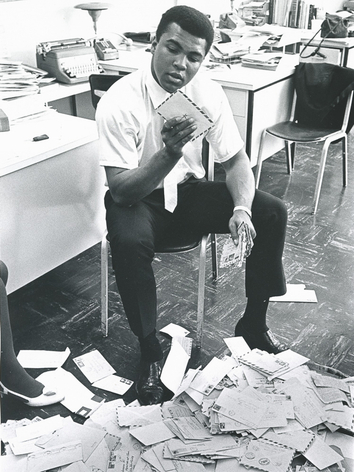
Darryl Cowherd, Cristal, Black Power, 1968

Darryl Cowherd, Cristal, Black Power, 1968

I was always very careful about my money. I had a savings plan, so I had enough money to take my first airplane trip to New York City. My hopes were to work my way around the world, photographing it. I went to New York to become a seaman. I went down to Port Authority day in and day out for a little while. The catch-22 was this: you needed seaman's papers to go to sea, and to obtain seaman's papers, the captain wanted to see a letter from your last ship. I didn’t have seaman's papers because I'd never worked on a boat. After a couple of weeks, with money fast running out, I was walking, I passed by a travel agency. There was a big sign in the window: last voyage of the French Line, tourist class cabin, $190, one way. That made sense to me. It was a six and a half day crossing. October, mid-Atlantic. I can't swim two inches at any part of my life, still. But I got on that ship. This was 1961.

My destination was Le Havre, but I ended up going to London first, which I hated—British food, British weather, all guys in the pubs. None of that was attractive to me, so I came back to Le Havre and took the train to Paris.

In Paris, I had a Kodak camera, but I didn’t have a portfolio. I had nothing to indicate I had any experience. I went to Dalmas and other French press agencies, and even to some of the labs, the places where you take your film to be developed. I ended up learning more that way than I did any other way.

There was a war in Algeria, and it was wartime in Paris. The banner headlines in the American papers were “Carry a passport with you at all times.” One day, I was standing at a hotel on the Left Bank with my roommate, on our way to get some lunch. Two steps from the entrance, we were on the street. Next thing I know, there's a guy running past us. Then: pow, pow, pow. The guy running here, the guy with the gun here, and we were right there. They were carrying grease guns, which they called rapid firearms at the time. It was a good springboard if you wanted to be a war photographer. But that didn’t pan out in any kind of way. And since one of the last jobs I had before I left the States was working for the U.S. Army, I decided to hitchhike to the army base in Germany.

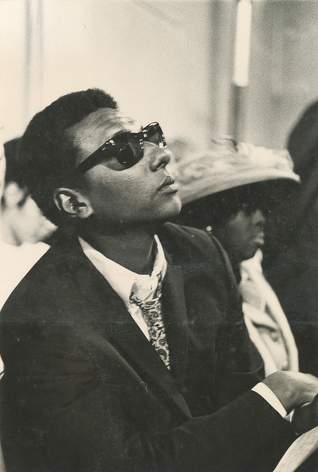
Darryl Cowherd, Gordon Parks, South Side Community Arts Center, Chicago, Illinois, 1964

Darryl Cowherd, Gordon Parks, South Side Community Arts Center, Chicago, Illinois, 1964

After a week there, it didn’t work. I ran into a guy I grew up with in Woodlawn, and he showed me a lot of rope there, but he told me to go back to Paris. I had some money left in a savings account back home, and my mother would dole it out to me. I ended up learning how to sleep while walking. I could walk down a fairly busy street that I knew and not bump into anybody, taking catnaps between steps. I spent three years in Europe, Paris, Barcelona, Sweden, Belgium, and elsewhere. I came back to Chicago around 1964.

Back in Chicago, I worked in a film lab and made photographs on the weekends and in the evenings. Then I went to work as a reporter for Muhammad Speaks, the Nation of Islam's newspaper, which was based in the city. I was hired as a reporter, a writer. They sent me on assignment, and I took some photographs, developed the film, made prints, returned to the office and showed them both the writing and photographs. And that was that. From then on, “Darryl, make sure you get some pictures when you go.” I worked for Muhammad Speaks for three years or so.

During that time period, I met and photographed Gordon Parks. He was on a tour of the South Side Community Arts Center with Herbert Nipson, who was the managing editor of Ebony. When I met him, my first thought was that he really knew how to dress. He had on a houndstooth suit jacket. There was one thing I couldn’t deny about him, which was that he had several talents. Everybody else has half. He could write, he could make music, he could do this, he could do that.

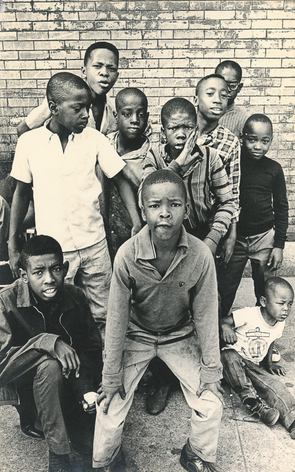
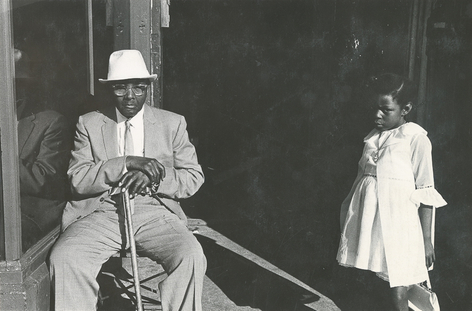
Darryl Cowherd, Family at the Wall of Respect, 43rd and Langley, Chicago, 1967

Darryl Cowherd, Family at the Wall of Respect, 43rd and Langley, Chicago, 1967

I was still at Muhammad Speaks when we began planning the Wall of Respect. There was an organization, the Organization of Black American Culture (OBAC), and within that organization, there were various groups: writers, painters, administrators, photographers, and others. I had done a story on a Black arts gallery located near 76th and Stony Island, and they had hosted the first meeting of the OBAC. At that point, the photographers' group was being formed. It was Onikwa Bill Wallace, Billy (Fundi) Abernathy, and me. We, the three of us, formed the core photographic group. And it is a matter of record that every photographer who wanted to be part of it had to audition. They had to show a portfolio.

About Billy Abernathy: Born to the camera, that man. He could take pictures. And the irony is that we grew up together, played on the playground at seven years old. At one point, Billy's dad had 250 taxis on the streets of Chicago. He had a custom-made Jag and tailored suits. Billy had access that gave him a certain attitude. But he loved music and literature. When James Baldwin came to town, we hung out at Billy’s apartment.

My day job was still with Muhammad Speaks, so I was out on scenes and following stories. The Wall of Respect planning overlapped with that. The Wall was at 43rd Street and Langley, in Bronzeville. Putting photographs directly onto the mural was revolutionary. I found a guy on the north side who weatherized prints, and I came up with the idea to mount them on Masonite. We both worked out the weatherization covering for it, and the actual print, was probably 24 by 24 [Cowherd’s photograph of Amiri Baraka at Dunbar High School (1967) was mounted on the Wall's literature section, and is the only surviving portion of the Wall of Respect].

I was still on assignments at Muhammed Speaks, as a reporter. I became friends with Buzz Palmer and Renault Robinson, who founded the Afro-American Patrolman's League. The police were infiltrating the events that were being held in front of the Wall of Respect. The gang with the most influence in that neighborhood was the Blackstone Rangers. They played both ends.

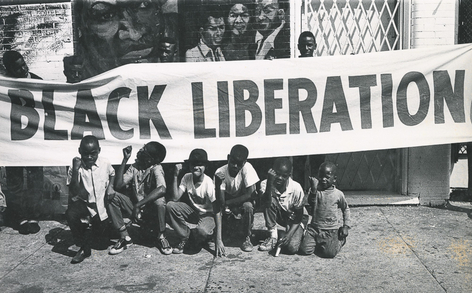
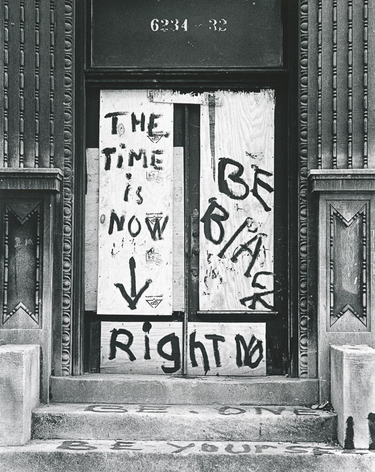
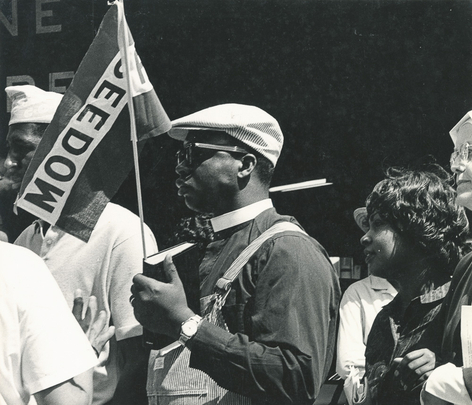
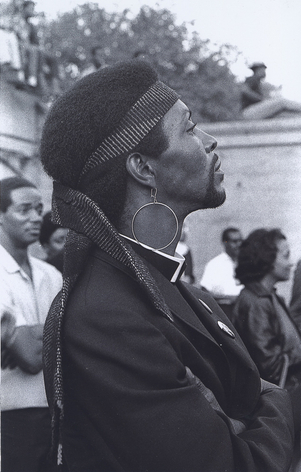
Darryl Cowherd, Wall of Respect, 43rd and Langley, Chicago, 1967

Darryl Cowherd, Wall of Respect, 43rd and Langley, Chicago, 1967

Around this time, the New Left convention was being hosted at the Palmer House. And boy, Chicago was never like this. I was there photographing on my own, not on assignment. I ran into Roy Lewis and Gaston Neal. They had this banner going around the balcony of the large meeting room. And Roy got the bright idea: “these white folks don't need this; we need this up at the Wall of Respect.” So we took it. I drove a station wagon, so we put it in my car and went down to the Wall. It was daytime, about two o'clock, no one but kids around. We had them hold up the banner, and it became part of the Wall of Respect. And then it just kind of disappeared.

In 1968, I went back to Sweden, following an invitation from the Swedish photo cooperative Bild. The way it worked was that you spent two years in the home office, which was Stockholm, and then you rotated. They had photographers in ten different places around the world. The Swedish Red Cross was one of their clients. My job was to go with the transport—food, medicine, cargo—to the operation, photograph the Red Cross workers doing their thing, and bring it back. I came back to Chicago in 1970.

The next year, in 1971, the Wall of Respect was destroyed by fire. There had been rumors about it getting torn down for a while. So, one night, I took a friend and his brother in my station wagon, and we drove down to the Wall to save my photograph. I climbed on top of the station wagon and unfastened my photograph.

Once I was back in Chicago, people were moving into film, including me. I worked on a few film projects and a PBS show. I started out as a grip, and then did some sound for a while. I went to work for Jim Tilmon’s show, Our People. Tilmon was one of the most talented guys. In addition to being a pilot, he was a meteorologist and accomplished musician. I also did a short stint in Detroit, and I produced a show around 1971.

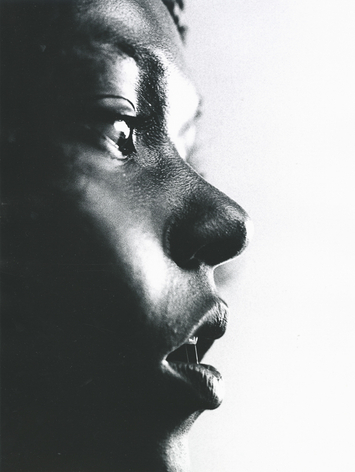
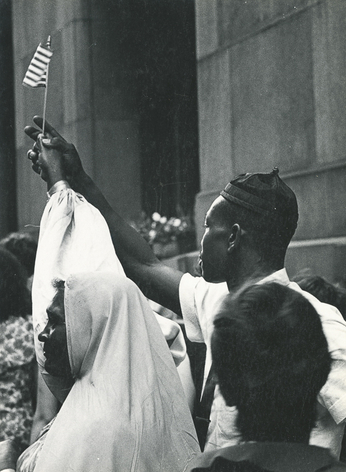
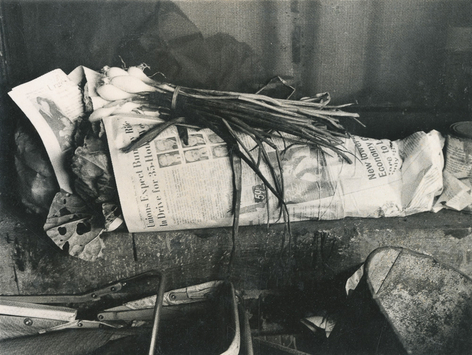
Darryl Cowherd, Benin, 1967/70

Darryl Cowherd, Benin, 1967/70

The transition to film was hard because technically, I just couldn't get into it the way I needed to, and it seemed like it would require me giving up stills. At that point, I would've died before I gave up my still camera. So I stayed within the media framework. I did PR, I put together newsletters, I did graphic design, all of that. And for all intents and purposes, it came relatively easily, because from the calligraphy all the way up, you could see a pattern of development and skill going on in that line.

I decided to send out some resumes for work in TV. I sent one to a TV station in D.C., and packed up my stuff. My second year in D.C., I started photographing Rock Creek Park. I called the project Rock Creek Park: All Four Seasons.

I really just wanted to be good. Because of Robert Earl Wilson, because of Billy Fundi Abernathy, because of Onikwa Bill Wallace, because of Bob Crawford, and because of Jim Hinton, I am probably the best that I could be. But I was never as good as most of them. And I thank them, because they taught me. And more importantly than anything, I want everybody else to be aware of their work, because that's where the real benefit is.